
If You're Not Doing Passive Programming in your Library… Why Would You Do That to Yourself?10/10/2025 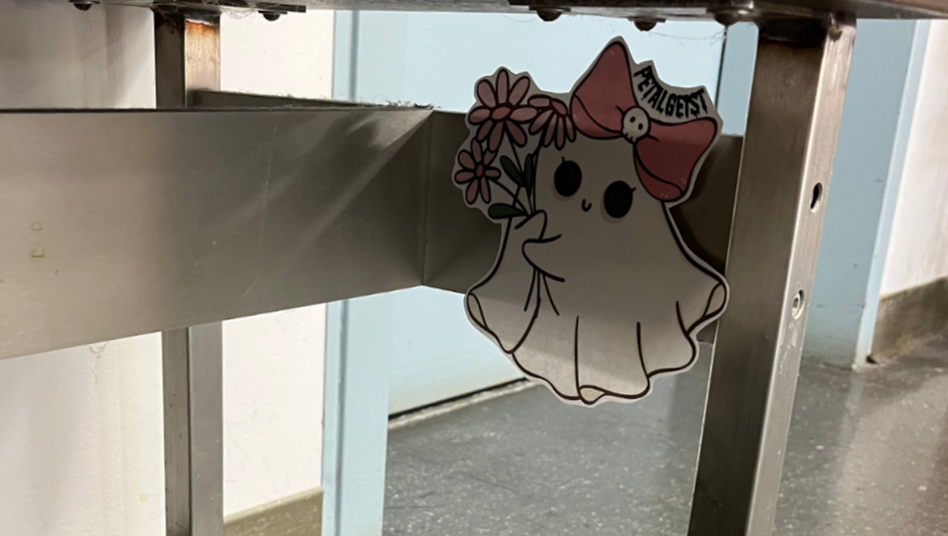 A ghost from the October Scavenger Hunt hiding under the Seed Library. Passive programming has become a cornerstone of our library’s programming repertoire over the past few years and honestly, I can’t imagine going back. Between the chaos of full-scale events, the constant scheduling, and the never-ending marketing cycle, passive programs are like a little gift you give your future self. They let your community engage on their own time, and they keep your library lively without burning out your staff.
0 Comments
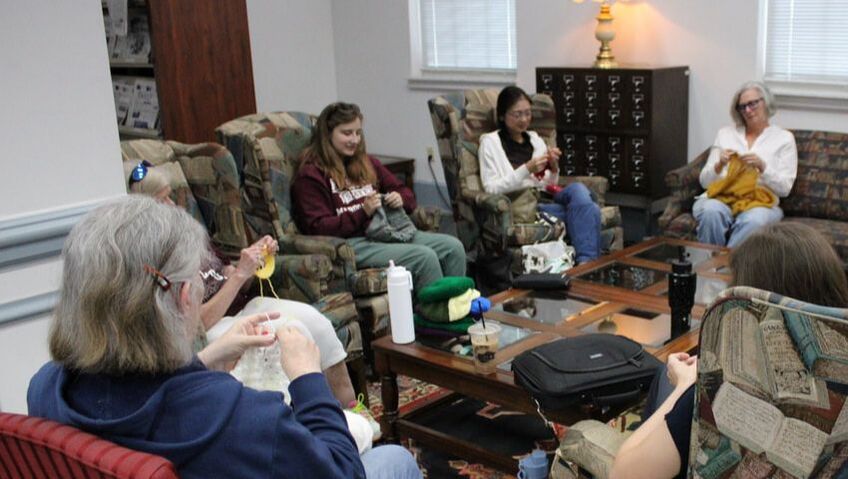 My longest-running program is one that, technically, I didn’t even start. When I was first hired at the Starkville Public Library, a staff member named Nicole had already begun experimenting with adult programming. She was an avid crocheter and wanted to create a space for fiber arts at the library. Across the country, many libraries host similar groups, and Nicole launched one of our own: Common Threads.
Around the same time, the local fiber arts guild was looking for a new place to meet on Wednesdays. They gather almost daily in different spots around town, and our library happened to be a perfect fit. Since then, every other week we’ve welcomed a group of 8–10 women who crochet, knit, sew, and cross-stitch together. Once, a participant even brought her spinning wheel and spun thread from the fur of her pet rabbits. She brushed, collected, and turned the fur into yarn. What began as a small gathering has now lasted nearly four years. The program has grown so much that we host it every Wednesday, and we’ve even added a Monday morning session after the bookstore where the guild used to meet closed its doors. Since we were already an established hub for them, they turned to us first. I couldn’t have made this program thrive alone. When I inherited it, I didn’t know a single fiber art. I even taught myself to crochet just to better support the group. But the real reason Common Threads continues to flourish is the passion of its members. They love what they do! They love it so much, I often joke they’d show up even if we didn’t want them to. From running this program, I’ve learned that the key to a successful adult program is knowing your community. What are people already passionate about? In our town, fiber arts thrive, and so do gardening projects — which is why our gardening programs are always a hit. Right now, I’m exploring other homesteading topics we might bring into the library. But again, it comes down to finding your people. A public library isn’t just a repository of knowledge or a keeper of tomes. It’s more like a hospital: a safe, welcoming place where people can come as they are and enjoy what they love — without anyone asking them to buy something. 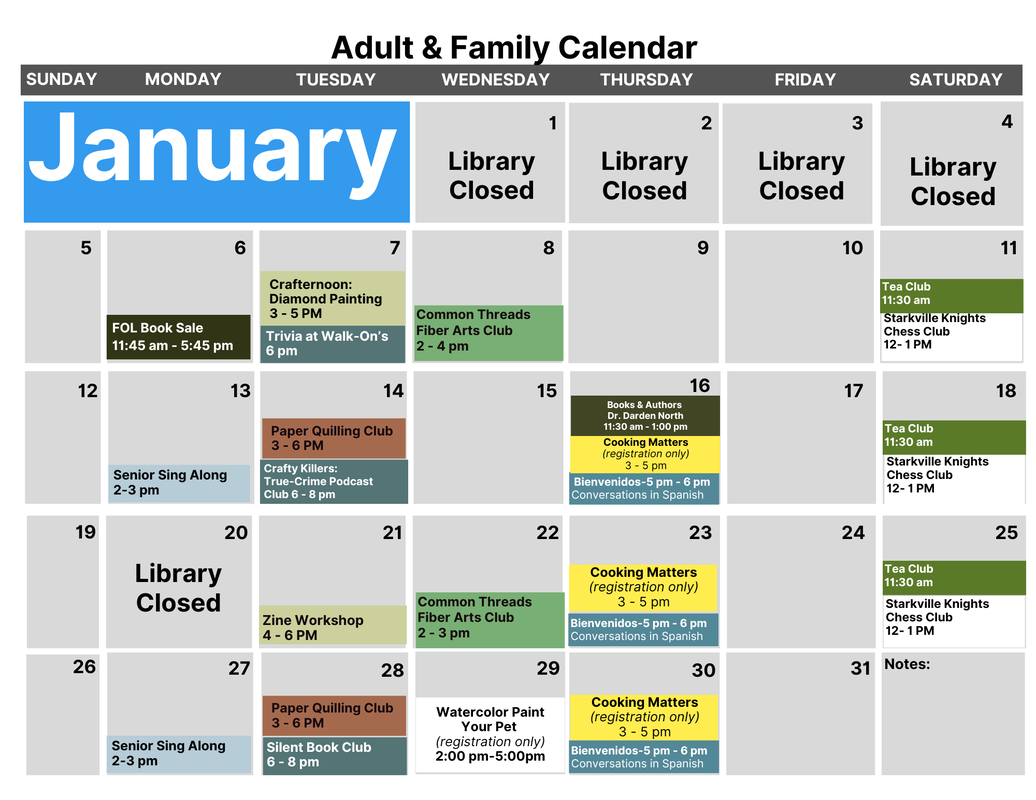 Hello. My name is Brandi Lomax. I am the Adult Programming Coordinator for the Starkville Public Library in Starkville, MS. I haven't always been a programming librarian. I have always been a writer. I've always felt more comfortable expressing my thoughts in the written word than through any other means. That's part of the reason I majored in English for my B.A.
There was a time in my life when I seriously considered going into marketing. I had a small copywriting position at an inbound marketing agency in Saltillo, MS. In that position, I wrote website copy and blog posts for local companies. I enjoyed the work and have wanted to start my own blog for over a decade. Unfortunately, I've been operating in survival mode financially for the past eight of that decade, and any personal projects that did not have a financial incentive had to be shoved to the side. After the copywriting job, I was an Assistant Store Leader at GameStop in Starkville. I loved my team at GameStop, but that was close to the worst working experience I've ever had. My team was great. Believe it or not, we were lucky because our district management was great. Most of our guests (minus the obligatory Karens, incels, and goons all service industry workers deal with) were great—corporate sucks. I felt horrible shoving GameStop products down the throats of my guests. I knew full well they didn't need our products. GameStop products were not going to enrich their lives in any way. The only enrichment it did was for the CEO's pockets. With not much else to do in the sleepy college town of Starkville, there was an opportunity that GameStop couldn't (and still can't) look past the dollar bills to see. That's community. Many people who visited the GameStop were gamer geeks, DND nerds, and card game dweebs looking for like-minded people to share their passions with. GameStop taught me to take that longing for community and manipulate it to sell overpriced, poorly made-junk. I was on one of my shifts at GameStop when I had the epiphany to apply for Library School. I was alphabetizing the games when inspiration hit me. "I could be doing this in a library." As a child, I said I wanted to be a librarian and write books. Part of me forgot that until that moment. The weeks that followed my dreams were filled with libraries. I had dreams of running my fingers along the cool spines of the books in the book carts. Warm gentle winds swirled around me and guided me through unending mile-high stacks whispering something I couldn't quite hear but what felt like home. I truly believe the career of a librarian is not just a career but a calling. The thing that has brought me the most joy has been the opportunity to build communities through the programs I create. I want this blog to be a resource to fellow programming librarians or anyone interested in creating library programs. My plan for this blog is to document and expound upon the programs I am currently running. I intend to explain in detail how I run them, why they did or didn't work, and any feedback I was given. I also plan to provide lists of supplies I use. If possible upload the marketing materials I use. I want other programming librarians to be able to replicate what I do if they think a program I run would fit their demographic in their community. I intend to try to become an Amazon affiliate member. When I create suggested supply lists for the programs I do, I'll provide a link to Amazon. If you make a purchase using my link, Amazon will give me a small cut. That provides me with a small financial incentive to create this blog. As mentioned earlier, any personal project that does not have a financial incentive for me has had to be pushed aside. Now that I have student loans from my MLIS that's even more true. However, I refuse to let this blog be overpriced poorly made junk. Also, a good half or more of my programs can be done for free or using materials a programming librarian may already have. When I started creating programming at the Starkville Public Library, there was no budget. I understand how underfunded libraries are. I don't intend to push any products on anyone. I will create lists of products that programming librarians may find helpful and let Amazon pay me for doing so. Lord knows Bezos can afford it. Now I want to hear from you? What are some things you would be interested in reading about? Leave a comment below and I'll do my best to accommodate. |
AuthorI’m Brandi Lomax, a librarian and adult programming coordinator with a passion for connecting people to stories, skills, and each other. I believe libraries are more than buildings—they’re community hubs where curiosity is welcomed, creativity is nurtured, and everyone belongs. ArchivesCategories |
 RSS Feed